Five Common Labeling Problems
During the product labeling process, certain issues can arise that negatively affect the label’s quality, functionality, and, of course, the final appearance of the product. Below are five of the most common problems that may occur during label application.
Bubble Formation
The most common cause is dust, dirt, or small particles on the surface, which prevent the label from adhering smoothly. Always ensure the surface is clean and smooth (wipe it down if necessary). If the surface itself is uneven, achieving a flawless application won’t be possible.
1. On glass, metal, or similar materials, check the packaging quality.
2. On plastic packaging, silicone additives may reduce adhesion.
3. If bubbles appear on labels already in the roll (especially laminated labels), these may be “fish eyes,” caused by trapped air between layers. They usually disappear within 24–72 hours.
Wrinkles and Creases
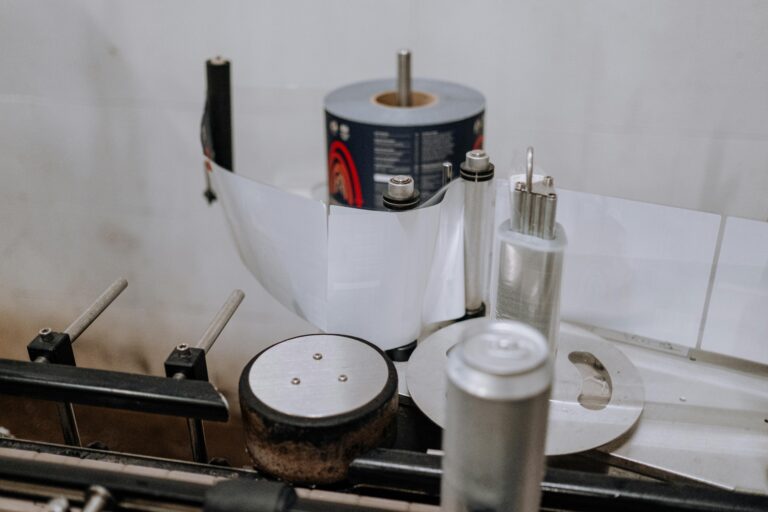
These often occur on cylindrical surfaces such as jars and bottles. For automatic application, make sure both the roll and products are properly aligned and stable. Inspect the pressure rollers, as label materials are pressure-sensitive—the rollers must be clean, smooth, and even to ensure firm adhesion.
For tapered or complex shapes, adjust the label size and shape already during the design stage.
Hand application tip: for long labels, start from one edge and gradually peel away the backing while pressing the label onto the surface. Alternatively, fix the center first and smooth outward toward the edges.
Incorrect Size
When choosing label size, remember that even in automatic application, labels can shift by a millimeter. If a lid is D70, design the label slightly smaller (e.g., D68) to avoid overlap. Overhang not only looks unprofessional but can also collect dust or stick to other products.
For wraparound labels, avoid placing important elements at the edges. If the label is slightly too long, you can overlap the ends without cutting off crucial text or design details.
Labels Won’t Stick
If labels don’t adhere at all, the issue is usually the surface:
1. Textured surfaces (e.g., untreated wood, concrete, fabric) may require specialized materials, or labels may not be suitable at all.
2. Moist, greasy, or cold surfaces (e.g., condensation, oil, frost) must be cleaned, or the process adjusted (e.g., apply labels before filling the product).
Labels Peel Off
If labels stick initially but peel away later, the cause is often unsuitable material or adhesive. A common case is frozen products: if the surface temperature is below +5°C, a special “ice” adhesive is required.
Heat also affects adhesive performance. For products filled hot or exposed to high temperatures (+80/90°C), the adhesive must match these conditions.
Paper and cardboard packaging can cause challenges:
1. Recycled materials often contain silicone particles.
2. Some boards are fibrous and reduce adhesion.
3. Cartons printed with standard offset inks may resist adhesives. In such cases, stronger or more specialized adhesives are often needed.
How to Avoid Labeling Problems
1. Answer specialist questions honestly and share any special circumstances.
2. Check delivered labels – ensure they peel smoothly from the roll and the backing paper is even.
3. Inspect packaging – make sure it’s clean, dry, and free of bumps or defects.
4. Store labels properly – temperature 22°C ± 2°C, relative humidity 50% ± 5%, in a clean and dry space, ideally in their packaging.
5. Avoid direct sunlight, heat exposure, and aggressive chemicals.