What Is a Label Made Of?
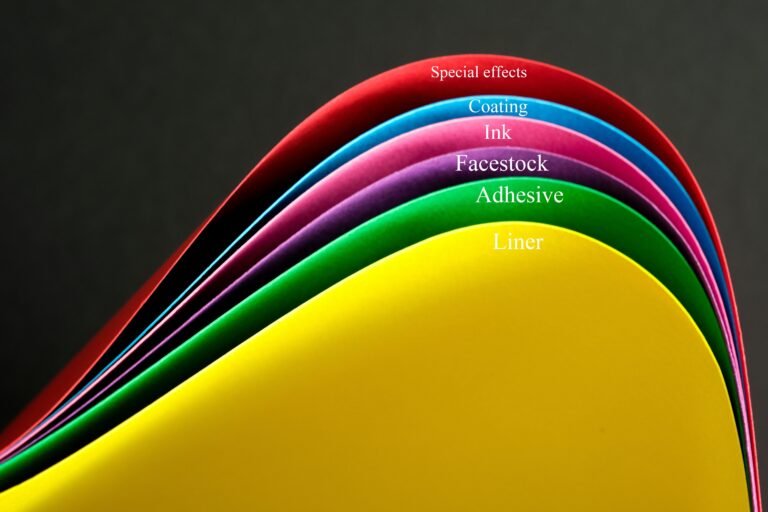
A pressure-sensitive label is a layered construction – what you see on a product is only the top part of a small sandwich of materials, each with a specific job. Understanding the structure helps explain why material choices affect durability, application method, and cost.
The Base Construction: Three Layers
1. Facestock (the top layer) This is the visible part of the label where the design is printed. Facestock can be paper or film (typically polypropylene or polyethylene), and the choice affects both appearance and durability. Paper is economical and prints well; film is moisture-resistant and more resilient to mechanical wear. Transparent film is used when a no-label look is needed; metallized materials – when a metallic effect is required for specific areas.
2. Adhesive A coating applied to the underside of the facestock. Once the liner is removed, the adhesive bonds the label to its surface. The main types are:
- Permanent (standard): bonds strongly and is not intended for removal
- Removable: allows the label to be peeled off cleanly without leaving residue
- Frost/ice adhesive: formulated to bond at low temperatures, for frozen product labelling
- Pasteurization adhesive: withstands the heat and moisture of pasteurization processes
If you have a specific application requirement – aggressive surfaces, repeated cold/wet exposure, easy removal – it’s worth mentioning this when ordering, as adhesive selection isn’t always obvious from the product description alone.
3. Liner (silicone paper) The backing that protects the adhesive until the label is applied. The liner is coated with silicone on the side facing the adhesive, which prevents premature bonding and allows clean release.
Liners come in two main types:
| Paper liner | PET liner | |
| Material | Cellulose paper | Polyester film |
| Thickness | Standard | Thinner — more labels per roll |
| Strength | Good | Higher — fewer breaks on applicators |
| Best for | Manual application, standard machines | High-speed automatic application, wet environments |
PET liners are thinner than paper, which means more labels fit on a roll of the same diameter. This reduces the required storage space and changeover frequency on automated lines. They’re also less prone to tearing under the tension of high-speed applicators, however, it should be noted that this is a significantly more expensive solution. Paper liners remain common and work well for most standard applications.
Where Label Materials Come From
Most print houses, including Olderi, purchase ready-made label stock from material manufacturers – rolls that already combine facestock, adhesive, and liner. This means that if you need a specific combination not held in stock (for example, textured paper with frost adhesive), it needs to be ordered from the manufacturer. The print house cannot swap or combine material components itself.
What Printing Adds
Once the base material is printed, additional layers are applied:
Ink The type of ink depends on the printing technology – UV ink, water-based ink, electro ink, or a specific ink for the particular project. Each has different properties in terms of color range, chemical resistance, and compatibility with different facestocks.
Coating Applied after printing to protect both the facestock and the printed design. Two options:
- Varnish: a standard protective coat that guards against environmental exposure and gives the label a finished appearance (glossy or matte)
- Laminate: a film layer bonded over the printed surface; used when the label needs to withstand mechanical handling, chemicals, or prolonged moisture exposure
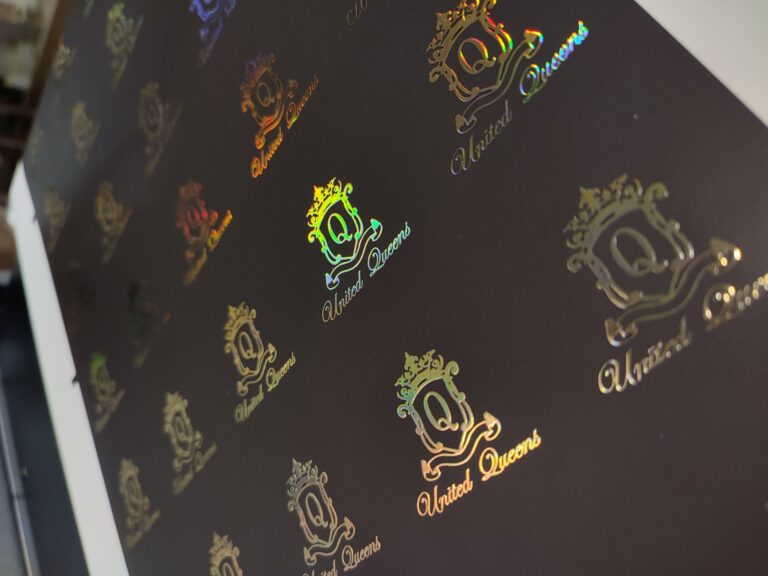
Special effects depending on the project, additional finishing processes can be applied. For example, hot foil stamping, cold foil, or screen printing for various premium effects.
Not sure which material combination is right for your product? The answer usually depends on how the label will be applied and what it needs to survive. Get in touch and we’ll help you work it out.